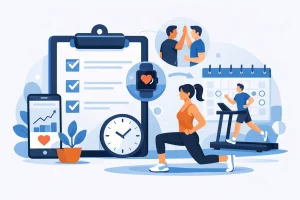

Calendar full. Inbox overflowing. Energy running low by late afternoon. That is exactly why a personal trainer for busy professionals can make such a dramatic difference. When your day is already tightly scheduled, fitness has to be efficient, structured, and worth the time you invest.
For many professionals, the problem is not a lack of motivation. It is friction. Commercial gyms are crowded. Commutes eat into the day. Generic workout plans ask you to think too much when your mind is already occupied with work, family, and responsibilities. If getting healthier feels like one more thing to manage, it usually gets pushed aside.
The right training environment changes that. Instead of wasting time deciding what to do, waiting for equipment, or trying to stay focused in a busy gym, you walk into a private room, work one-on-one with an experienced coach, and complete a targeted session built around your goals. That is how fitness becomes realistic for people with demanding schedules.
Why busy professionals need a different kind of training
Most fitness advice is written for people who have flexibility in their day. Busy professionals usually do not. Your workouts need to fit around meetings, deadlines, travel, and family obligations. They also need to deliver results without requiring two-hour gym visits five days a week.
That is where a personal trainer for busy professionals stands apart from a typical gym experience. The goal is not just exercise. The goal is to create a professional, high-quality system that removes guesswork and gets results in less time.
A strong program starts with efficiency. Short sessions can be highly effective when they are properly designed. Thirty focused minutes with a skilled trainer often produce more value than a full hour spent moving casually through random exercises. Intensity, structure, and progression matter more than simply being present in a gym.
There is also an accountability advantage. High performers tend to keep commitments that are scheduled, specific, and tied to clear outcomes. A standing appointment with a coach is very different from telling yourself you will work out sometime after work. One is a decision already made. The other is vulnerable to every interruption the day throws at you.
What to look for in a personal trainer for busy professionals
Experience matters, but not in a vague way. You want a trainer who understands how to work with adults who have real schedules, real stress, and real physical limitations. That includes beginners who feel uncomfortable in a public gym, former athletes returning to training, and professionals rebuilding strength after long stretches of sedentary work.
The best coaching is individualized. Your trainer should assess your current fitness, your movement quality, your injury history, and your actual schedule. If your trainer gives every client the same template, it is not personal training. It is packaged exercise.
Privacy is another major factor that many people underestimate until they experience it. In a private training setting, you are not competing for equipment, wondering who is watching, or trying to concentrate through noise and distractions. That matters for confidence, but it also matters for performance. You can focus fully on the work.
Flexibility in scheduling and billing also deserves attention. Busy professionals rarely want another membership they feel locked into. Session-based training often makes more sense because it gives you structure without unnecessary pressure. It is a premium service, but for the right client, it is a smarter use of money than paying for a gym membership you barely use.
Why private training works better than a crowded gym
A crowded gym can work for some people. If you are highly self-directed, know exactly what to do, and do not mind distractions, it may be enough. But many professionals are not looking for access. They are looking for outcomes.
That is one reason private-room personal training has become so appealing. The environment is clean, quiet, and controlled. Every minute of your session is used with purpose. You are not navigating around other members or adjusting your workout because machines are taken. Your trainer is watching your form, managing pace, and making real-time decisions based on how you are moving that day.
There is also a comfort factor. Many adults put off training because they do not want to feel exposed, judged, or out of place. A completely private studio removes that barrier. For someone who has been hesitant to begin, that can be the difference between thinking about fitness and actually committing to it.
At a premier private training studio like UST Personal Training, that privacy is paired with expert coaching and modern equipment, creating a setting where busy clients can train seriously without the chaos of a commercial gym.
Efficient workouts are not shortcuts
There is a misconception that shorter sessions are somehow less effective. In practice, the opposite is often true when the training is designed well. Long workouts are not automatically better. Better workouts are better.
For busy professionals, a 30-minute session can be ideal because it forces focus. There is no wasted time, no wandering between exercises, and no filler. A trainer can move you through strength work, conditioning, and mobility with a level of precision that keeps the session productive from start to finish.
That said, efficiency should not mean intensity at all costs. A smart trainer knows when to push and when to scale. If you are under heavy work stress, recovering from travel, or managing an old injury, the session may need adjustment. That is not a compromise. That is good coaching.
The best results usually come from consistency, not hero workouts. Busy professionals do better with a program they can actually sustain. Two or three high-quality sessions per week often outperform an ambitious plan that collapses by the second month.
Beyond exercise: coaching that fits real life
Fitness results are shaped outside the studio as much as inside it. Training matters, but so do sleep, nutrition, cardiovascular fitness, stress, and recovery. A premium coaching experience should reflect that reality.
That does not mean you need a complicated wellness overhaul. In fact, busy clients usually benefit from the opposite. Clear guidance, realistic expectations, and practical adjustments tend to work best. If your trainer can help you improve meal choices during workdays, build a sensible cardio routine, and recover better between sessions, your progress becomes much easier to maintain.
This is where personalization matters again. A business owner, a medical professional, and a parent with a demanding career may all have different constraints. Their training plans should not look identical. Effective coaching meets the client where they are, then builds upward from there.
The real value is reduced friction
People often ask whether personal training is worth the investment. For busy professionals, that question should be framed differently. What is the cost of continuing without structure?
When fitness is left to chance, it usually loses. Weeks pass. Energy drops. Strength declines. Small aches become bigger issues. Stress accumulates without a physical outlet. Eventually, getting started feels harder than it should.
A personal trainer reduces friction at every step. The session is scheduled. The plan is written. The coaching is direct. The space is prepared. You show up, train with purpose, and leave knowing you did something meaningful for your health. That level of support is not just convenient. It is often what makes consistency possible.
There is a premium attached to that kind of service, and that is fair. You are paying for expertise, personalization, privacy, and time efficiency. For professionals who value high standards in other parts of life, those same standards often make sense in fitness too.
Choosing the right fit in Tampa
If you are searching for a personal trainer for busy professionals in Tampa or South Tampa, look beyond credentials alone. Pay attention to the training environment, the level of privacy, the structure of the sessions, and whether the approach feels tailored instead of generic.
Ask yourself simple but important questions. Will this setup save me time or create more hassle? Will I feel comfortable enough to stay consistent? Does the trainer understand my goals and limitations? Is the coaching built around results, not just activity?
The right answer usually feels clear. You should feel supported, not sold to. Challenged, not overwhelmed. Confident that your sessions are designed for your life, not for an imaginary ideal schedule.
If your workdays are full and your health keeps falling to the bottom of the list, the solution is rarely to try harder on your own. It is to make fitness simpler, more private, and more precise so it finally fits the way you actually live.