Your calendar fills up before breakfast, meetings run long, and by the time the day slows down, most workout plans already feel unrealistic. That is exactly why the best workouts for busy professionals are not the ones that look impressive on paper. They are the ones you can recover from, repeat consistently, and fit into real life without wasting time.
For most working adults, the goal is not training like an athlete twice a day. The goal is building strength, improving energy, protecting long-term health, and staying lean enough to feel confident – all without turning fitness into another full-time job. That requires efficiency, smart programming, and enough structure to keep progress moving even during demanding weeks.
What makes the best workouts for busy professionals work
A good workout for a packed schedule has to do three things well. First, it needs to produce a meaningful training effect quickly. Second, it needs to be flexible enough to scale up or down based on stress, sleep, and workload. Third, it needs to avoid the common trap of leaving you so exhausted that tomorrow’s schedule becomes even harder to manage.
This is where many popular fitness trends fall short. High-intensity sessions can be effective, but too much intensity piled on top of a high-stress workweek often backfires. Long steady-state cardio can help with health and recovery, but it may not deliver the strength and body composition changes most people want if that is all you do. The best approach usually blends strength, cardiovascular work, and mobility in a way that respects both your goals and your schedule.
1. Full-body strength training
If you only have a few training windows each week, full-body strength training gives you the most return on your time. Instead of splitting workouts into separate muscle groups, you train major movement patterns in one session. That means squatting, hinging, pushing, pulling, and core work can all be covered in 30 to 45 minutes.
This style works especially well for professionals because it builds muscle, supports joint health, and improves metabolic demand without requiring five gym visits a week. A focused session might include goblet squats, dumbbell rows, incline presses, Romanian deadlifts, and loaded carries. With smart rest periods and good coaching, that is enough to create progress without unnecessary volume.
The trade-off is that full-body sessions need thoughtful exercise selection. If every workout is too heavy or too aggressive, fatigue adds up quickly. The best programs balance challenge with sustainability.
2. Strength circuits for 30-minute efficiency
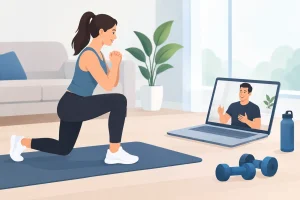
When time is tight, strength circuits are one of the best workouts for busy professionals because they keep the session moving while still prioritizing quality. A circuit might pair lower-body work, upper-body work, and core training in rotating rounds with minimal downtime.
Done correctly, this format gives you both strength and conditioning benefits. It also eliminates the dead space that makes many workouts inefficient. Instead of wandering through a crowded gym or waiting on equipment, you move with purpose.
This is where a private training environment can make a major difference. In a focused studio setting, each station is prepared for your session, the workout is customized to your ability level, and every minute is used well. For professionals who value privacy and precision, that matters.
3. Interval cardio that does not waste time
Cardio still matters, especially for heart health, stress management, and workday energy. The mistake is assuming it has to mean long, monotonous sessions. Short interval training can be highly effective when programmed correctly.
A practical example is alternating one minute of hard effort with one to two minutes of easier recovery on a bike, rower, incline treadmill, or sled. In 15 to 20 minutes, you can raise cardiovascular capacity without losing an hour.
That said, intervals are not something to do at maximum intensity every day. If your sleep is low and your stress is high, moderate intervals may be better than all-out efforts. The right dose depends on your recovery capacity, not just your motivation.
4. Walking intervals and incline treadmill sessions
Not every effective workout has to feel intense. Walking intervals, especially on an incline, are one of the most underrated options for busy adults. They improve cardiovascular fitness, support fat loss, and are far easier to recover from than repeated hard conditioning sessions.
For professionals who spend much of the day seated, incline walking can also help restore movement without adding joint stress. A 20- to 30-minute session done consistently can improve endurance and increase daily calorie burn while keeping fatigue low.
This option is especially valuable during high-pressure work periods. When your schedule is demanding, a lower-impact session you actually complete is far more useful than an extreme workout you keep postponing.
5. Low-impact conditioning with strength support
Many adults need a plan that challenges them without beating up their joints. Low-impact conditioning fits that need well, particularly for people returning to exercise, rebuilding after injury, or managing chronic stiffness from desk-heavy work.
This can include sled pushes, rowing, cycling, medicine ball work, battle ropes, and controlled bodyweight movements. These sessions elevate the heart rate while reducing the pounding that often comes with high-impact exercise.
The benefit is that low-impact conditioning can be paired with strength training in the same workout. That creates a balanced session with muscle-building value and cardiovascular payoff. At a premier private training studio like UST Personal Training, that kind of combination can be tailored precisely to the client rather than forced into a one-size-fits-all class format.
6. Short mobility and core sessions
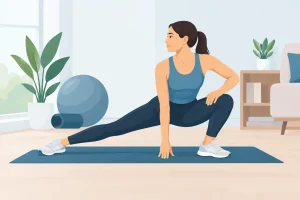
Mobility work does not always get treated like a real workout, but for busy professionals it can be one of the smartest tools in the week. Long hours at a desk, in a car, or on flights create stiffness through the hips, spine, shoulders, and ankles. Left alone, that stiffness makes strength training less effective and daily discomfort more common.
A focused 15- to 20-minute session built around mobility, breathing, and core stability can improve posture, movement quality, and recovery. It also helps people stay consistent when a full workout is not possible.
This is not the flashy part of training, but it is often the difference between random exercise and a plan that holds up over time. Professionals who move well tend to train more consistently, and consistency is what produces visible results.
7. Hybrid sessions that match your week
For many adults, the ideal plan is not choosing one training style forever. It is combining methods based on the realities of the week. One day may call for a full-body strength session. Another may be best served by incline walking and mobility. A third might be a short circuit with focused conditioning.
That hybrid approach works because it reflects how real life operates. Work deadlines, travel, family demands, and sleep quality all affect training readiness. A rigid plan often breaks under pressure. A personalized plan adapts.
This is why coaching matters. The best workouts for busy professionals are not just about selecting exercises. They are about matching the right session to the right day so progress continues without burnout.
How to choose the right workout for your schedule
If your main goal is improving strength and body composition, full-body strength training and circuits should anchor most of your week. If stress is high and recovery is limited, walking intervals and low-impact conditioning may be the better fit. If pain, stiffness, or previous injury is part of the picture, mobility and customized coaching become even more important.
The right answer also depends on how many days you can train honestly, not ideally. Two well-planned sessions a week can produce meaningful results. Three is excellent for many professionals. More can work, but only if recovery, nutrition, and scheduling support it.
What does not work well is constantly starting over. Random workouts, inconsistent intensity, and unrealistic plans create the feeling of effort without the payoff of progress. A shorter, structured plan usually beats an ambitious plan you cannot sustain.
Why efficiency beats excess
Busy professionals often assume results require longer workouts. In practice, quality usually matters more than duration. A focused 30-minute session with expert coaching, smart sequencing, and no distractions can outperform a scattered hour at a commercial gym.
That is especially true when privacy, accountability, and personalization are part of the experience. When the session is built around your goals, your current fitness level, and your schedule, there is less wasted effort and more measurable progress.
You do not need more fitness content, more complexity, or more guilt. You need a training approach that respects your time and still delivers a high standard of results. The best workout is the one that fits your life well enough to become part of it.