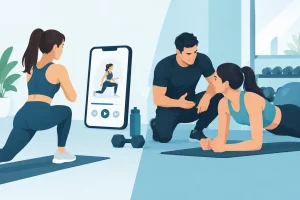

A workout plan only works when it fits your real life. If crowded gyms make you hesitate, your schedule changes by the week, or you are unsure whether your form is helping or hurting, the choice between personal training versus online coaching matters more than the workout itself. Both can produce meaningful results, but they ask different things of you and provide different levels of support.
For many people, the best option is not the least expensive program or the one with the most flashy promises. It is the coaching format that gives you enough structure, accountability, and professional guidance to train consistently and progress safely.
Personal Training Versus Online Coaching: The Core Difference
Personal training is live, hands-on coaching. Your trainer sees how you move, adjusts exercises in the moment, manages the pace of the session, and builds training around your goals, limitations, and current fitness level. At a premium private studio, that experience also removes the noise, crowds, and self-consciousness that can make a commercial gym feel like one more obstacle.
Online coaching is typically delivered through an app, video calls, messaging, or a combination of all three. Your coach writes a program, reviews check-ins, and may provide nutrition or lifestyle guidance. You perform most or all workouts on your own, usually at a home gym, commercial gym, or wherever you have access to equipment.
Neither model is automatically better. The right decision comes down to how much direct instruction you need, how independently you train, and what has kept you from reaching your goals in the past.
When In-Person Personal Training Is the Better Investment
Personal training is built for people who want an expert in the room, not just a program on a screen. That distinction becomes especially valuable when efficiency, confidence, and safety are high priorities.
You Want Immediate Form Correction
A video demonstration can show you what a squat or deadlift should look like. It cannot reliably tell you, in real time, when your knees are shifting, your back is compensating, or your range of motion has changed as fatigue sets in. An experienced trainer watches those details and makes immediate adjustments.
This is not about chasing perfect-looking exercises. It is about making each movement productive for your body. A trainer may modify the load, stance, tempo, equipment, or exercise selection to keep you progressing without forcing you into a one-size-fits-all template.
That hands-on coaching is particularly useful for beginners, adults returning to exercise after time away, and anyone rebuilding strength after an injury. It is also valuable for experienced exercisers who have hit a plateau and need sharper programming rather than more random workouts.
You Need a Protected Appointment
Motivation is unreliable when every workout requires a fresh decision. A scheduled training session creates a commitment on your calendar, and a trainer is ready with a plan before you arrive. You do not spend the first 15 minutes deciding what to do, waiting for equipment, or negotiating with yourself about whether to push a little harder.
For busy professionals, this can be the difference between training occasionally and training consistently. A focused 30-minute session can be highly effective when the exercises, rest periods, and progression are planned with purpose. Short does not mean casual. It means every minute has a job.
Privacy Helps You Train Better
Many people are capable of more than they show in a crowded gym. They may avoid unfamiliar equipment, skip strength training, or rush through movements because they feel watched. Others simply value discretion and do not want their fitness routine to become a public experience.
Private-room training changes that environment. You have dedicated space, modern equipment, and your trainer’s full attention without spectators, lines, or distractions. That comfort matters. When people feel at ease, they are more likely to ask questions, focus on technique, and stay with the process long enough to see results.
Your Program Needs to Adjust Week by Week
A good training plan should respond to life. Poor sleep, work travel, a sore shoulder, a new fitness goal, or a stressful week can all affect what makes sense in a session. In-person coaching makes those adjustments easy. Your trainer can assess how you are moving that day and alter the session without losing sight of the larger plan.
At UST Personal Training, this individualized approach extends beyond exercise selection. Clients receive guidance that can support cardiovascular fitness, dietary planning, recovery, and sustainable habits, all within a private, appointment-only setting.
When Online Coaching May Be a Strong Fit
Online coaching can be a practical choice for someone who already understands the basics of training, has dependable access to equipment, and is comfortable working out without direct supervision. It often offers more flexibility than fixed appointments, which can help frequent travelers or people with unpredictable schedules.
It may also work well if you enjoy following written programs and taking ownership of your sessions. A qualified online coach can provide progressive programming, review workout data, and hold you accountable through regular check-ins. For a disciplined person with solid movement skills, that support may be enough.
The trade-off is that the client carries more responsibility. You must set up the workout, execute it correctly, manage distractions, report honestly, and notice when something does not feel right. Video feedback can help, but it is not the same as having a coach observe every rep as it happens.
Online coaching can feel less personal when your needs are more complex. If you are managing pain, learning new lifts, rebuilding confidence, or repeatedly struggling to follow through, delayed feedback may not be the support you need.
Compare the Cost by the Support You Actually Use
Online coaching is often less expensive on paper because it does not include a trainer’s live time for every workout. That lower monthly price can be appealing, especially if you are comfortable training alone and have a well-equipped gym available.
But price should be measured against follow-through. A low-cost plan that sits unopened in an app is not a bargain. Neither is a generic gym membership that leaves you wandering the floor, unsure of what to do next. The more individual attention you need to train safely and consistently, the more value direct personal training can provide.
Personal training is a premium service because it combines expertise, real-time coaching, customized programming, equipment access, and accountability in one focused appointment. It also avoids the common membership model that pressures people into long commitments they may not use. Session-based training lets clients invest in meaningful coaching rather than paying for access alone.
Questions That Make the Choice Clearer
Ask yourself what happens when you train alone. Do you complete the workouts you plan, use good form as you get tired, and know how to progress from week to week? If the answer is consistently yes, online coaching may give you the structure you need at a lower level of hands-on support.
Then ask what has stalled you before. If you tend to lose momentum, feel intimidated by gyms, need help working around physical limitations, or want maximum value from limited training time, in-person personal training is likely the stronger fit.
Your environment matters, too. Someone with a home gym, years of lifting experience, and a self-directed personality may thrive online. Someone who wants privacy, expert attention, and a clear plan from the moment they walk in may get better results in a private studio.
The Best Coaching Format Is the One You Will Sustain
Fitness results rarely come from a single perfect program. They come from repeating well-designed training for months, adjusting when life changes, and having enough support to keep going when enthusiasm fades. That is why the decision should be practical, not ideological.
If you want the flexibility to train on your own and already have the confidence to do so, online coaching can be a useful tool. If you want direct expertise, a distraction-free environment, and a trainer who can make every session count, private personal training offers a higher-touch path forward.
Choose the setting that makes it easier to show up, work with purpose, and leave knowing your next step is already handled.