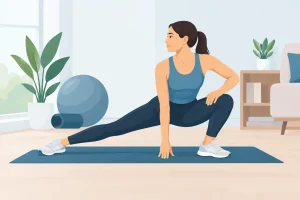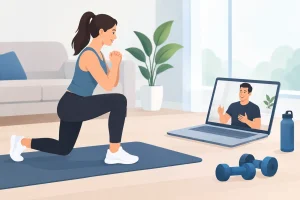

Thirty minutes can feel too short when you walk into a crowded gym without a plan. It can also be enough time to make meaningful progress when every exercise, set, and minute has a purpose. Learning how to maximize short workouts is not about cramming more exercises into less time. It is about applying the right training stimulus for your body, goals, and current fitness level.
For busy professionals, beginners, and anyone returning to exercise, a focused 30-minute session can remove one of the biggest barriers to consistency: the belief that fitness requires hours of free time. The goal is not to leave exhausted for the sake of it. The goal is to train with precision, build momentum, and return for the next session ready to improve.
How to Maximize Short Workouts Without Rushing
The first rule of efficient training is simple: arrive with a program. Wandering between machines, deciding what to do next, and scrolling through workouts can turn a 30-minute appointment into 15 minutes of actual exercise. A customized plan protects your time and keeps your attention on the work that produces results.
A quality short workout usually centers on one primary objective. That may be building lower-body strength, improving upper-body pushing strength, developing cardiovascular capacity, or practicing full-body movement patterns. Trying to train every possible quality at maximum effort in one short session often creates a rushed, unfocused workout. A better approach is to make each session part of a larger weekly plan.
For example, one session may prioritize squat and lunge patterns, while another focuses on pulling, pressing, and core stability. A third may use carefully selected conditioning intervals. Across the week, the training adds up without asking you to spend long stretches in the gym on any single day.
This is where individualized coaching matters. Two people can have the same 30 minutes but need very different workouts. Someone rebuilding after an injury may benefit from controlled strength work, mobility, and stability. An experienced exerciser may be ready for heavier compound lifts or demanding conditioning intervals. The most efficient workout is not the hardest workout on paper. It is the one that challenges you appropriately and can be repeated consistently.
Prioritize Exercises That Deliver More Value
Short sessions call for movements that train multiple muscle groups and support real-world strength. Squats, hinges, presses, rows, carries, lunges, and step-ups can create more training value than spending most of the session on isolated exercises.
That does not mean smaller movements have no place. Targeted work for shoulders, glutes, arms, or core can be useful, especially when it supports a specific goal or addresses an imbalance. The difference is priority. In a limited session, begin with the movement that requires the most concentration, skill, and energy. Add targeted exercises after the main work is complete.
Exercise selection should also respect your body. A barbell back squat may be an excellent choice for one person and an uncomfortable choice for another. The same strength pattern can often be trained with a goblet squat, leg press, split squat, or supported variation. Good programming is not about forcing a fashionable exercise. It is about finding the safest, most productive way for you to train the intended movement.
Make Transitions Part of the Program
A productive 30-minute session is organized before the first set begins. Equipment should be ready, rest periods should be intentional, and the order of exercises should make sense. In a private training environment, there is no waiting for a bench, negotiating for dumbbells, or losing focus in a crowded room. That uninterrupted flow is a real advantage when time is limited.
Rest still matters. Reducing rest to almost nothing may make a workout feel intense, but it can undermine form and performance. If your goal is strength, you may need longer recovery between challenging sets so you can use good technique and enough resistance. If your goal is conditioning, shorter, structured work-to-rest intervals may be more appropriate.
The key is to avoid accidental rest. A planned 60 seconds between sets is training. Five unplanned minutes spent looking for equipment is not. Your coach should manage the pace so the session feels focused rather than frantic.
Train Hard Enough to Create Change
Short workouts work when they provide a meaningful stimulus. That may come from gradually increasing resistance, completing more quality repetitions, improving control, or increasing the amount of work you can perform at a given effort level. This principle is called progressive overload, and it is more valuable than random variety.
You do not need to test your limits in every session. In fact, constantly training to failure can leave you overly sore, compromise technique, and make consistency harder. Most people make steady progress by ending many working sets with one to three good repetitions still available. The effort should be challenging, but your form should remain controlled.
Pay close attention to the quality of each repetition. A set of eight well-executed rows, squats, or presses is more productive than a set of 15 rushed repetitions completed with poor positioning. Technique helps you direct the exercise toward the intended muscles while reducing unnecessary stress on joints and connective tissue.
For beginners, coaching is especially valuable here. Learning to brace, hinge, press, pull, and breathe correctly creates a foundation that makes future workouts more effective. For experienced clients, coaching provides a different benefit: objective feedback, sharper execution, and a program that continues to progress instead of repeating the same routine for months.
Use Supersets Carefully, Not Automatically
Supersets can be an excellent tool for maximizing a short workout. Pairing a lower-body exercise with an upper-body movement, or a push with a pull, can keep you moving while one area recovers. A set of dumbbell presses followed by rows, for example, can be an efficient pairing when the loads and technique are appropriate.
But supersets are not mandatory. Heavy strength work, technical lifts, and rehabilitation-focused movements may require dedicated rest and full attention. The right question is not, “How can I make this feel harder?” It is, “What structure helps me get the best result from this session?”
A well-designed session may include one primary lift, a paired strength block, and a brief conditioning or core finisher. That structure creates variety without turning the workout into a race. It also gives your trainer room to adapt if your energy, schedule, or physical condition is different from what it was last week.
Treat Warm-Ups and Recovery as Performance Tools
Skipping a warm-up can seem like an easy way to save time. Usually, it costs time later through stiff movement, poor technique, or a greater chance of aggravating something that could have been addressed early. A short, purposeful warm-up prepares the joints and muscles you will actually use.
For a lower-body session, that might include hip mobility, glute activation, bodyweight squats, and a few lighter ramp-up sets before the working weight. For an upper-body session, it may include shoulder positioning, light pulling work, and controlled pressing. The warm-up does not need to be long. It needs to be specific.
Recovery also determines whether short workouts keep working. Sleep, protein intake, hydration, daily movement, and stress management affect how well your body responds to training. If fat loss is a goal, exercise is only one part of the picture. A personalized nutrition strategy and sustainable daily habits will matter as much as the calories burned in a 30-minute session.
Build a Weekly Schedule You Can Keep
The best short workout plan is one that fits your real calendar. Two or three focused sessions each week can produce excellent results when paired with a thoughtful program and consistent effort. Some clients benefit from additional walking, mobility work, or cardiovascular training between sessions. Others need more recovery because of a demanding job, travel, or a return from injury.
Consistency beats the occasional marathon workout. A plan that asks for 30 focused minutes and gets completed week after week is far more valuable than an ambitious routine that disappears after two weeks. Track your workouts, note how you feel, and adjust your program as your strength, confidence, and goals change.
At UST Personal Training, private one-on-one coaching helps turn limited time into a structured, high-quality training experience. With a dedicated trainer, modern equipment, and a distraction-free private room, your session can stay centered on your goals instead of the noise around you.
A short workout should leave you with more than sweat. It should leave you stronger, more capable, and clear on the next step. Give each session a purpose, respect good form, and let consistent effort do what rushed workouts never can.