A hard workout does not need to leave your knees aching, your shoulders irritated, or your schedule in ruins. The best low impact strength exercises let you build meaningful muscle, improve stability, and raise your fitness level without the pounding associated with running, jumping, or high-volume boot camp workouts. For many adults, that is the difference between a routine that lasts and one that gets abandoned after two weeks.
Low impact does not mean low effort. It means minimizing repeated forceful contact with the floor and choosing movements that match your current mobility, strength, injury history, and goals. With the right resistance, range of motion, and coaching, these exercises can challenge beginners, busy professionals, and experienced exercisers alike.
What Makes Strength Training Low Impact?
A low-impact exercise limits jarring forces on the joints. That does not automatically make every movement easy or appropriate for every condition. A squat, for example, can be low impact, but the right depth, stance, and load depend on your hip, knee, ankle, and back comfort.
The goal is to create muscular tension while maintaining control. That may mean using machines for added stability, dumbbells for a more natural range of motion, cables for consistent resistance, or bodyweight movements to rebuild confidence before adding load. Good form is not a cosmetic detail. It is what helps direct the work to the intended muscles and keeps training productive.
10 Best Low Impact Strength Exercises
1. Goblet Squat to a Box
Holding one dumbbell close to your chest, sit back toward a bench or box, lightly touch it, then stand by driving through your full foot. The box gives you a clear target and helps you control depth without collapsing into the bottom of the movement. This is an excellent way to train the quads, glutes, and core while building confidence with squatting.
Start with a box height that lets you move without pinching or pain. As control improves, use a lower box, add a small amount of weight, or slow the lowering phase.
2. Dumbbell Romanian Deadlift
The Romanian deadlift strengthens the hamstrings, glutes, and upper back without impact. Hold dumbbells in front of your thighs, soften your knees, and push your hips backward while keeping the weights close to your legs. Stop when your hamstrings feel a strong stretch and your back position remains neutral, then stand tall by squeezing your glutes.
This is a hinge, not a squat. Many people bend their knees too much or reach the weights toward the floor. A shorter range with excellent control is more valuable than forcing depth.
3. Supported Split Squat
Split squats develop single-leg strength, balance, and hip stability, all of which can make stairs, walking, and daily movement feel easier. Hold onto a stable support or use a rack for balance, take a comfortable staggered stance, and lower straight down under control. Keeping support available allows you to focus on your legs instead of worrying about balance.
If a traditional split squat bothers your knees, adjust the stance or limit the depth. A trainer can also help determine whether a step-up or leg press is the better starting point.
4. Leg Press
A leg press provides a stable way to train the lower body, particularly for people who are learning to squat or returning to exercise after time away. Place your feet about shoulder-width apart on the platform and lower the sled only as far as you can keep your pelvis and lower back comfortably supported.
The machine does not replace learning to move well, but it can be a highly effective tool for safely building leg strength. Avoid locking out your knees forcefully at the top, and do not chase range of motion that causes your lower back to round.
5. Glute Bridge or Hip Thrust
Glute bridges and hip thrusts train hip extension with very little joint impact. For a bridge, lie on your back with your knees bent and push through your heels to lift your hips. For a hip thrust, support your upper back on a bench and add a dumbbell or barbell across the hips once bodyweight control is solid.
These movements can improve glute strength while helping balance the demands of prolonged sitting. Keep your ribs from flaring upward and finish each repetition with a firm glute squeeze rather than an exaggerated lower-back arch.
6. Seated Cable Row
Strong upper-back muscles support better posture, shoulder control, and pulling strength. On a cable row, sit tall, pull the handle toward your lower ribs, and pause briefly as your shoulder blades move back and down. Return slowly instead of allowing the weight stack to pull you forward.
The cable row is especially useful because the resistance stays consistent throughout the movement. It is also easy to adjust for different body sizes and strength levels.
7. Chest Press Machine or Dumbbell Floor Press
Pressing exercises build the chest, triceps, and shoulders, but they should not create sharp pain at the front of the shoulder. A chest press machine offers stability and a simple path of motion. A dumbbell floor press is another smart option because the floor naturally limits how far the elbows travel behind the body.
Choose the variation that allows a controlled, comfortable press. More range is not always better if shoulder mobility is limited. Progress comes from consistent tension and gradual loading, not from forcing the deepest possible position.
8. Lat Pulldown
The lat pulldown develops the muscles of the upper back and arms without impact or complicated setup. Use a grip that feels comfortable, sit tall, and pull the bar toward the upper chest while keeping your shoulders from shrugging toward your ears. Let the bar rise with control until your arms are long again.
Avoid pulling the bar behind your neck. That position often adds unnecessary stress without providing a better training result. A moderate load that you can control is the right place to begin.
9. Pallof Press
The Pallof press trains the core to resist unwanted rotation, which is valuable for lifting, carrying, and everyday movement. Stand sideways to a cable or resistance band, hold the handle at your chest, then press it straight out while keeping your torso square. The resistance tries to rotate you, and your job is to remain steady.
This exercise is low impact but deceptively demanding. It is a strong option for clients who want core training beyond endless crunches, particularly when back comfort is a concern.
10. Farmer Carry
A farmer carry is one of the most practical strength exercises available. Hold a dumbbell or kettlebell in each hand, stand tall, and walk slowly with controlled steps. Your grip, shoulders, core, hips, and legs all work together to keep you upright.
The key is quality, not speed. Select a weight that challenges your posture without causing you to lean, shuffle, or hold your breath. Carries are easy to scale by changing the load, distance, pace, or using one weight instead of two.
How to Build a Low-Impact Strength Workout
A well-designed session does not require every exercise on this list. For most people, choosing one squat or leg exercise, one hip hinge or glute exercise, one push, one pull, and one core or carry movement creates a balanced foundation. Two to four sets per exercise can be plenty when the sets are focused and challenging.
Start with a load that allows approximately eight to 12 controlled repetitions for most movements. The final few repetitions should feel demanding, but your form should remain consistent. When you can complete the top end of that range with confidence, add a small amount of weight, a repetition, or a set. Progression should be deliberate, not rushed.
Your recovery matters, too. Two or three full-body strength sessions per week often works well for busy adults, especially when paired with low-impact cardiovascular exercise such as incline walking, cycling, or the elliptical. If you have active joint pain, a recent surgery, or a diagnosed condition, seek guidance from an appropriate medical professional before pushing through discomfort.
Why Individual Coaching Changes the Result
The best low impact strength exercises are only as effective as their execution and fit within your program. A movement that feels excellent for one person may need a different setup, range, or substitute for another. That is particularly true for adults rebuilding after injury, newcomers who feel intimidated in commercial gyms, and professionals who need every minute of training to count.
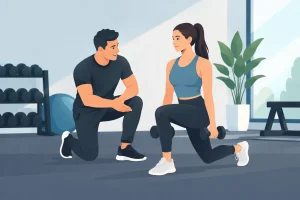
At UST Personal Training, private one-on-one sessions allow your trainer to adjust your program in real time, coach form without distractions, and make a focused 30-minute workout productive. You are not expected to guess which machine to use or work around a crowded gym floor. The training is built around your body, your schedule, and measurable progress.
Choose the exercise variation you can perform confidently today, then earn the next progression through consistency. Stronger joints, better movement, and lasting results are built one controlled repetition at a time.