
The best cardio workouts for beginners are not the ones that leave you exhausted, sore, or dreading your next session. They are the ones you can perform safely, repeat consistently, and progress with confidence. For many adults, especially those returning to exercise after time away, the right starting point is less about intensity and more about finding a comfortable rhythm that fits real life.
Cardio training supports heart health, energy, endurance, weight-management goals, and recovery between strength-training exercises. But a beginner program should respect your current conditioning, schedule, movement history, and any past injuries. A focused 30-minute session can be highly effective when it is built around the right movements and guided at the right pace.
Best Cardio Workouts for Beginners: What Makes Them Work
A good beginner cardio workout elevates your heart rate without asking your joints, balance, or technique to do more than they are ready for. It should also be easy to adjust. If a movement feels too demanding, you should be able to slow it down, reduce the range of motion, or take a short recovery break without ending the workout altogether.
The most useful measure is not whether you are dripping with sweat. Use the talk test instead: during most beginner cardio, you should be able to speak in short sentences but not comfortably carry on a long conversation. That generally places you at a sustainable moderate effort. Some brief, more challenging intervals can come later once your body is prepared.
Your best option depends on your preferences and physical needs. Walking may be ideal for someone rebuilding basic stamina. A stationary bike can be a smarter choice for a person with joint discomfort. A coach-guided circuit may suit a busy professional who wants an efficient, structured workout without having to figure it out alone.
Start With Low-Impact Cardio Options
Low-impact does not mean low results. It means at least one foot remains on the ground or the equipment supports your body weight, reducing repetitive impact on the ankles, knees, hips, and back. This makes low-impact work especially valuable for beginners, people carrying extra weight, and those returning to training cautiously.
Brisk Walking
Walking is one of the most effective and accessible ways to begin. Start with a pace that feels purposeful rather than casual. Your arms should swing naturally, your posture should stay tall, and you should be able to maintain the pace without gripping your shoulders or holding your breath.
A simple starting session might include five minutes of easy walking, 15 to 20 minutes of brisk walking, and a few minutes to cool down. As your endurance improves, add small hills, increase the pace, or extend the brisk portion by five minutes. Outdoor walking offers fresh air and variety, while treadmill walking makes it easier to control speed and incline.
Stationary Cycling
A stationary bike gives beginners a controlled cardio option with minimal joint impact. It is particularly helpful when walking feels uncomfortable or when you want to challenge your legs without the pounding of running.
Keep the resistance light enough that your pedaling remains smooth. Avoid immediately turning the session into a hard climb. Begin with 15 to 20 minutes at a steady effort, then gradually introduce short resistance increases. Proper bike setup matters: a seat that is too low or too far away can make an otherwise comfortable workout feel unnecessarily hard on the knees.
Elliptical Training
The elliptical combines a walking-style movement with the support of machine-based training. It can elevate your heart rate quickly while limiting impact, making it a strong option for beginners who want a full-body feel.
The trade-off is coordination. If the moving handles and foot pedals feel awkward at first, slow down. Focus on standing upright rather than leaning heavily into the handles. Ten to 15 minutes is enough for an initial workout, and you can build from there as the movement becomes familiar.
Pool Walking or Water Aerobics
Water provides natural resistance while reducing stress on the joints. Pool walking, gentle swimming, and beginner water aerobics can be excellent choices for people managing joint sensitivity, stiffness, or a significant return-to-fitness journey.
Water workouts can feel easier than they are because the body stays cooler. Pay attention to your breathing and effort level, and do not assume you need to push harder simply because you are not sweating as much. As with any new exercise routine, people with medical concerns should speak with their health care provider first.
Add Simple Cardio Circuits When You Want Variety
Machines and walking are not the only ways to build endurance. A well-designed cardio circuit uses uncomplicated movements performed in intervals, creating an efficient workout without requiring advanced athletic skills. The key is choosing exercises you can control.
A beginner circuit may include marching in place, step-ups to a low platform, bodyweight squats to a comfortable depth, light medicine ball movements, or battle ropes adjusted to your ability. Work for 30 to 45 seconds, recover for 30 to 60 seconds, and repeat. The goal is quality movement under a manageable level of fatigue, not racing through repetitions.
This style of training is valuable because it also develops coordination, muscular endurance, and confidence with basic movement patterns. It can be more engaging than staying on one machine, but it is not automatically better for every beginner. If balance, knee pain, or unfamiliarity with exercise is a concern, starting with walking or cycling may be the more appropriate route.
Should Beginners Run?
Running can be an excellent cardio workout, but it is not a required starting point. Many people feel pressure to run because it appears to be the fastest route to fitness. In reality, starting too aggressively can lead to shin discomfort, knee irritation, excessive fatigue, or frustration that interrupts consistency.
If you enjoy running and have no pain, begin with walk-run intervals. After a five-minute warm-up walk, alternate 30 to 60 seconds of easy jogging with one to two minutes of walking. Repeat for 15 to 20 minutes, then cool down. Keep the jog relaxed enough that you could repeat it again the next day without feeling depleted.
Increase either the jogging time or the total duration, not both at once. A gradual approach gives your muscles, tendons, and cardiovascular system time to adapt. There is no prize for skipping the foundation.
How Much Cardio Should a Beginner Do?
A practical starting target is two to three cardio sessions per week, with each session lasting 15 to 30 minutes. If that feels like too much, even 10-minute sessions count. Three short walks spread across the week are more productive than waiting for the perfect hour-long workout that never happens.
As your capacity improves, work toward roughly 150 minutes of moderate weekly activity. That number is a useful long-term health benchmark, not a demand for your first week. Some clients progress quickly; others need more recovery time because of stress, sleep, work travel, strength training, or previous inactivity.
Pay attention to how your body responds. Mild muscle fatigue is normal. Sharp pain, dizziness, chest discomfort, or unusual shortness of breath are not signals to push through. Stop and seek appropriate medical guidance when needed.
Make Progress Without Burning Out
Beginner progress often comes from small adjustments repeated over time. Add five minutes to a walk. Raise the bike resistance for one extra interval. Reduce rest slightly after a few weeks. These changes build fitness while preserving the confidence that makes a routine last.
Avoid the common mistake of making every session hard. Moderate cardio improves aerobic capacity, and easier sessions make it possible to recover, stay active, and show up again. A balanced week may include two steady sessions and one slightly more challenging interval session once your base fitness is established.
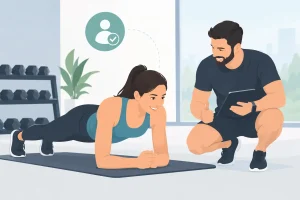
Strength training also supports better cardio. Stronger legs, hips, and core muscles can improve walking mechanics, cycling comfort, and control during circuits. At a private training studio, a qualified trainer can combine cardio and strength work into a focused plan that matches your goals, comfort level, and available time. UST Personal Training uses individualized coaching and private rooms to remove the guesswork and pressure that can make a crowded gym feel intimidating.
The right first workout is the one you are willing to do again. Start at a pace that feels sustainable, let consistency build your confidence, and give your body time to become stronger with every session.