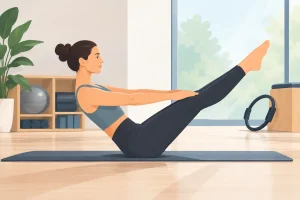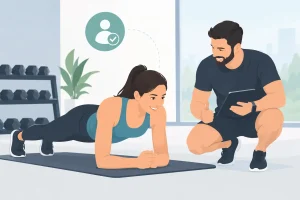

The hardest part of a first workout is often not the squat, the treadmill, or the weight in your hands. It is walking into an unfamiliar fitness environment and wondering whether everyone can tell you are new. This guide to beginner workout confidence starts with a better standard: you do not need to look experienced to deserve expert support. You need a plan that fits your current ability, a setting where you can focus, and enough consistency to see that your body is capable of more than you thought.
Confidence is not something you wait to feel before starting. It is built through safe, repeatable action. A well-designed first session should leave you feeling challenged, clear on what you accomplished, and comfortable returning for the next one.
Why Beginners Lose Confidence Before They Build It
Traditional gyms can create unnecessary friction. There may be crowded equipment, complicated machines, mirrors in every direction, and people who appear to know exactly what they are doing. For someone returning to exercise after years away, recovering strength after an injury, or simply trying fitness for the first time, that environment can turn a positive decision into an intimidating experience.
The problem is rarely a lack of motivation. More often, beginners have too many decisions to make at once. Which exercises should you choose? How much weight is enough? Is your form correct? Should you push through discomfort? What should you do if the equipment you planned to use is taken?
A strong training experience removes those questions one at a time. Rather than trying to copy a stranger’s routine, you follow a program built around your goals, movement history, schedule, and starting point. That structure creates early wins, and early wins are where real confidence begins.
A Guide to Beginner Workout Confidence Starts With the Right Goal
Many people begin with a result-based goal: lose 20 pounds, fit into older clothes, improve blood pressure, or feel stronger. These are worthwhile outcomes, but they can feel far away during the first few weeks. Pair them with process goals you can control immediately.
For example, commit to completing two or three sessions per week, drinking water before training, or practicing a few foundational movements with proper form. Process goals give you evidence that you are following through, even before the scale, measurements, or mirror changes.
Keep the first phase simple. You do not need to train every day, eliminate every food you enjoy, or leave each session exhausted. In fact, doing too much too soon is one of the fastest ways to lose momentum. A professional trainer can help you establish a level of effort that produces progress without making exercise feel like punishment.
Define what success looks like in the first 30 days
A successful first month may mean arriving consistently, learning how to hinge, squat, push, pull, and brace with greater control, and noticing that daily tasks feel easier. It may mean fewer aches when you climb stairs or more energy in the afternoon. These changes matter because they make fitness personal and practical.
The best goal is one that respects where you are now while giving you a reason to keep moving forward. Someone rebuilding after an injury needs a different starting point than a busy professional looking to maximize a 30-minute training window. Good coaching accounts for that difference.
Learn the Difference Between Challenge and Pain
Beginners often worry that exercise must hurt to work. That is not the standard. Productive training can include effort, elevated breathing, muscle fatigue, and the unfamiliar sensation of using muscles that have been undertrained. Sharp pain, joint pain, dizziness, numbness, or a sudden loss of control are different signals and should not be ignored.
This is one reason correct technique matters so much. Form is not about making an exercise look impressive. It is about helping the right muscles do the work while reducing unnecessary stress on your joints and lower back. The appropriate exercise can also change from session to session. A squat to a bench, for instance, may be a better place to start than a deep barbell squat. Neither option is a measure of your worth or effort.
Progressions are not shortcuts. They are intelligent programming. When you can perform a movement with control, your trainer can gradually adjust the range of motion, resistance, tempo, or volume. That is how confidence and strength grow together.
Build a Routine That Fits Real Life
Consistency is easier when your workout plan works with your actual schedule, not an idealized version of it. If you are balancing a demanding job, family commitments, or a long commute, a focused 30-minute session can be more valuable than a 90-minute plan you rarely complete.
Choose training times that have the least competition from your other responsibilities. Treat the appointment as you would an important meeting. Pack workout clothing in advance, know what you will do afterward, and remove small barriers that create excuses when your day gets busy.
Your program should also leave room for recovery. Sleep, nutrition, stress, and daily activity affect how you perform. Some weeks will feel stronger than others. That does not mean the plan is failing. It means your body is responding to real life, and your training should be adaptable enough to respond with it.
Start with the movements that deliver the most value
A beginner does not need an endless catalog of exercises. A thoughtful program commonly centers on fundamental patterns: squatting, hinging, pushing, pulling, carrying, and core stability. These movements support daily life while providing a reliable base for future training.
The details depend on your mobility, health history, preferences, and goals. A person with knee discomfort may need a different lower-body approach than someone preparing for a recreational race. This is where individualized programming is more valuable than a generic workout found online.
Choose an Environment That Helps You Focus
The environment matters more than people think. If you feel self-conscious in a crowded gym, you are less likely to ask questions, try unfamiliar movements, or return consistently. Privacy is not a luxury for many beginners. It is a practical advantage.
A private, appointment-only studio gives you room to learn without competing for equipment or feeling watched. You can focus on coaching cues, ask questions without hesitation, and train at the pace your body needs. For clients who value discretion, cleanliness, and a more personal experience, this setting removes much of the pressure associated with commercial gyms.
At UST Personal Training, one-on-one sessions in dedicated private rooms are designed to make that focus possible. You are not expected to arrive with a polished routine or prior training knowledge. The work begins with understanding your goals and creating a clear path forward.
Use Coaching as a Confidence Multiplier
A qualified trainer does more than count repetitions. They observe your movement, teach you how to create tension and control, adjust the plan when something does not feel right, and hold you accountable to the goals you set. That guidance is especially valuable at the beginning, when incorrect habits can become ingrained quickly.
The right coaching relationship should feel professional and encouraging. You should understand why you are doing an exercise, what you should feel, and how it connects to your goals. You should also feel comfortable saying when something is too easy, too difficult, or uncomfortable.
Confidence grows faster when feedback is specific. Instead of hearing only “good job,” you learn that your posture improved, your range of motion increased, or you completed more work with the same level of control. Those measurable improvements are proof that your effort is working.
Let Progress Be Quiet at First
The first signs of progress are often subtle. You may stand taller, feel less winded, sleep better, or stop negotiating with yourself before every workout. These are meaningful changes, even if they do not produce a dramatic before-and-after photo in a few weeks.
Track a few indicators that matter to you: sessions completed, weights used, repetitions performed with sound form, energy level, or how confidently you approach a movement that once felt unfamiliar. Avoid judging your progress against someone else’s training history, body type, or highlight reel.
Beginner workout confidence does not come from proving yourself in one difficult session. It comes from showing up, learning, and recognizing that you can handle the next step. Give yourself a setting and a plan worthy of that commitment, then let each well-coached session make the decision to continue a little easier.