
A forward head, rounded shoulders, or an aching lower back rarely comes from one bad sitting position. More often, it reflects a pattern: long workdays, limited movement, and muscles that are either underused or doing too much. Posture Pilates exercises address that pattern by building the control, strength, and body awareness needed to stand, sit, and move with better alignment.
Pilates is not about forcing your shoulders back or holding a stiff, military-style posture. Effective posture is adaptable. Your body should be able to maintain a tall, supported position while breathing freely, reaching, walking, lifting, and handling the demands of daily life. That requires coordination between the core, hips, upper back, and neck – not simply more stretching.
Why Pilates Works for Posture
Pilates places unusual attention on precision. Instead of rushing through repetitions, you learn where your ribs, pelvis, shoulder blades, and head are positioned in space. That matters because posture improves when your nervous system can recognize and repeat a more efficient movement pattern.
A quality program also strengthens the areas that commonly lose endurance during sedentary days: the deep abdominal muscles, glutes, upper back, and muscles around the shoulder blades. At the same time, it can improve mobility through the chest, thoracic spine, and hips. The goal is not to hold one perfect shape all day. It is to have more options, more control, and less strain.
If you have persistent pain, numbness, recent surgery, or a diagnosed spinal condition, begin with guidance from a qualified healthcare professional and an experienced trainer. Exercise should feel challenging in the muscles, not sharp, pinching, or unstable in the joints.
8 Posture Pilates Exercises to Build Better Support
These exercises work well as a focused 15- to 20-minute routine two or three times per week. Move slowly enough to maintain control. Breathing is part of every repetition: exhale gently during effort and avoid bracing so hard that your ribs flare or your neck tightens.
1. Pelvic Tilt and Imprint
Lie on your back with knees bent, feet hip-width apart, and arms by your sides. Begin in a neutral position, where the natural curve of your lower back is present. Exhale and gently tip your pelvis so your low back becomes heavier against the floor. Inhale back to neutral.
This is a small movement, but it teaches awareness of the pelvis, which influences the entire spine. Perform 8 to 10 controlled repetitions. Do not force your back flat or squeeze your glutes aggressively.
2. Supine Marching
Stay on your back with your pelvis in neutral. Exhale, lightly engage the lower abdominals, and slowly lift one foot just off the floor or bring the knee toward tabletop. Lower it with control, then alternate sides.
The challenge is keeping your pelvis steady as the legs move. If your back arches, your hips shift, or your neck tenses, make the movement smaller. Complete 6 to 10 repetitions per side. This is a practical drill for improving core control without relying on momentum.
3. Chest Lift With Long Neck
From the same position, place your hands behind your head with elbows wide, or reach your arms forward. Exhale and lift your head and upper shoulders slightly, as though lengthening the back of your neck away from your shoulders. Inhale to lower.
Avoid pulling on your head or trying to sit all the way up. The purpose is to build abdominal endurance while practicing a relaxed neck and open chest. Six to eight slow repetitions are plenty when your form is precise.
4. Swan Prep
Lie face down with your forehead near the floor, legs long, and hands beneath or slightly in front of your shoulders. Gently draw your shoulder blades down your back, then lift your chest a few inches as you lengthen forward. Lower with control.
Swan prep strengthens the upper back and encourages extension through the thoracic spine, the mid-back region that often becomes stiff after hours at a desk. Keep the back of your neck long and avoid cranking into the lower back. Start with 6 to 8 repetitions.
5. Single-Leg Bridge
Lie on your back with bent knees and feet grounded. Press through both feet to lift your hips into a bridge, maintaining a long line from shoulders to knees. Once steady, straighten one leg only if you can keep the pelvis level. Lower and switch sides.
This exercise challenges the glutes and hamstrings while asking the trunk to resist twisting. Those are valuable skills for walking, climbing stairs, and standing comfortably on one leg. If the single-leg version causes your hips to drop, stay with a standard bridge and focus on quality.
6. Side-Lying Leg Lift
Lie on one side with your head supported and your body in a long line. Keep your ribs stacked over your pelvis, then lift the top leg without rolling backward. Lower slowly.
The outer hip muscles help stabilize the pelvis during walking and single-leg activities. When they lack strength, the lower back or knees may take on more work than they should. Perform 10 to 12 repetitions per side, keeping the movement controlled rather than high.
7. Quadruped Reach
Begin on hands and knees with hands below shoulders and knees below hips. Exhale and reach one arm forward without shifting your weight. Return, then repeat with the other arm. Progress to reaching the opposite arm and leg only when you can keep your trunk stable.
Quadruped work builds the ability to control the spine while the limbs move independently. Keep your gaze down, broaden across the upper back, and resist the urge to collapse between the shoulders. Aim for 6 to 8 slow reaches per side.
8. Wall Roll Down
Stand with your back near a wall, feet a few inches forward, and knees soft. Nod your chin slightly, then slowly roll down one section of your spine at a time. Pause where you feel a comfortable stretch, then stack back up from the pelvis through the head.
This exercise is less about touching your toes and more about noticing how your spine moves. Use it to release tension after long periods of sitting, but skip deep range if it causes dizziness, radiating symptoms, or back pain.
How to Get More From Posture Pilates Exercises
Consistency beats intensity. A few deliberate sessions each week will usually do more for posture than one exhausting workout followed by several inactive days. It also helps to bring the same awareness into daily routines: set your screen at a workable height, change positions regularly, walk between long blocks of sitting, and avoid treating one rigid posture as the only correct one.
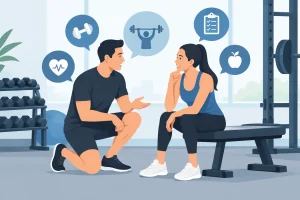
Your exercise selection should fit your body. Someone with rounded shoulders and a stiff upper back may benefit from more extension and upper-back strength work. Someone with an exaggerated lower-back arch may need greater control of the ribs and pelvis. A person returning from injury may need a more conservative progression and closer form coaching. This is where individualized training has a clear advantage over following a generic video routine.
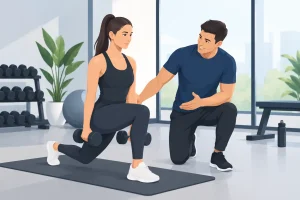
At UST Personal Training, private one-on-one sessions allow your trainer to assess how you move, adjust your technique in real time, and build posture-focused training around your strength, mobility, schedule, and goals. In a distraction-free private room, you can focus on the details that turn basic exercises into lasting improvements.
Better posture is not a pose you force for a photograph. It is the confidence of having a body that feels supported when your day asks more of it.