
The hardest part of getting stronger should not be walking through the front door. Yet for many people, a crowded gym can make a simple workout feel like a public performance: unfamiliar equipment, people who appear to know exactly what they are doing, limited space, and the sense that everyone is watching. Fitness coaching for gym intimidation changes that experience by replacing uncertainty with a clear plan, expert direction, and a setting where your comfort matters.
Feeling intimidated does not mean you lack discipline or that fitness is not for you. It usually means the environment has placed too many decisions in front of you at once. When you know what to do, why you are doing it, and have a professional guiding the process, training becomes far more approachable.
Why Traditional Gyms Can Feel So Intimidating
Commercial gyms are designed to serve a lot of people at the same time. That model works well for some experienced exercisers, but it can create real friction for beginners, busy professionals, and anyone returning after time away, an injury, or a major life change.
You may be trying to figure out how to adjust a machine while someone waits behind you. You may not know whether your form is correct with free weights. You may have a limited lunch break and spend half of it looking for equipment that is not already in use. Even a person with plenty of motivation can lose momentum when every workout feels confusing or exposed.
There is also a common misconception that confidence must come before you start. In reality, confidence is built through successful repetitions. You arrive, complete a workout you can manage, learn a little more, and leave knowing you followed through. The right coaching environment makes those early wins easier to achieve.
How Fitness Coaching for Gym Intimidation Helps
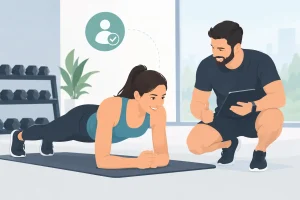
Effective coaching is not simply someone counting repetitions beside you. It is a structured process that reduces guesswork and helps you make progress safely. A qualified trainer begins by learning about your goals, current fitness level, exercise history, schedule, and any limitations that need attention.
From there, each session has a purpose. You do not have to wander from treadmill to machine hoping you picked the right routine. Your trainer selects movements that fit your ability, demonstrates proper technique, adjusts the challenge as you improve, and keeps the session moving efficiently.
That structure matters because uncertainty is often the real source of gym anxiety. When your next step is clear, you can put your energy into training rather than trying to look like you know what you are doing.
You Receive Immediate, Personal Feedback
Online workouts and general gym programs can be useful, but they cannot see how you move in real time. Personal feedback helps you learn proper positioning, breathing, range of motion, and control before poor habits become ingrained.
This is especially valuable if you are returning to exercise after an injury or have concerns about pain, balance, mobility, or strength. A good coach does not force you into a one-size-fits-all workout. They modify exercises, manage progression, and challenge you at the level that is appropriate for your body.
Your Program Has a Starting Point
Many people avoid the gym because they believe they need to get in shape before working with a trainer. That is backward. Coaching is designed to meet you where you are, whether you have never used strength equipment, have been inactive for years, or feel comfortable exercising but want more direction.
Your first phase may focus on learning movement patterns, improving cardiovascular capacity, and building consistency. As your technique and confidence improve, the program can progress toward strength, fat loss, athletic performance, mobility, or other personal goals. Progress should feel earned, not rushed.
Accountability Becomes Support, Not Pressure
A scheduled session gives your fitness plan a place on the calendar. For busy adults, that can be the difference between intending to exercise and actually doing it. The best accountability is not built on guilt. It comes from having a professional who tracks your progress, recognizes your effort, and adjusts the plan when work, travel, stress, or family responsibilities affect your routine.
Private Training Removes the Audience
For people who feel uncomfortable in a crowded gym, privacy is not a luxury add-on. It can be the reason they are able to begin and stay consistent.
A private, appointment-only studio removes many of the distractions that make commercial gyms challenging. There is no waiting for equipment, no crowded floor to navigate, and no pressure to compare yourself with strangers. Instead, you have dedicated space, modern equipment, and one-on-one attention from a trainer focused on your session.
That environment also creates a better learning experience. You can ask questions without feeling self-conscious. You can practice a movement until it feels natural. You can take a moment to reset without worrying that someone is waiting for the bench or machine.
At UST Personal Training, clients train in dedicated private rooms with experienced coaches who build each session around the individual. The focus is not on making you fit into a gym culture. It is on creating a high-quality training experience that fits your goals, your schedule, and your current starting point.
What to Expect From Your First Sessions
The first few sessions should feel informative and manageable, not punishing. A professional trainer will typically discuss your health history, prior exercise experience, goals, schedule, and any concerns you have about training. This is the time to be honest about what has made exercise difficult in the past.
You may start with basic movements such as squatting to a comfortable depth, pressing, pulling, carrying, stepping, and controlled core work. These are not “beginner” movements in a dismissive sense. They are foundational patterns that support daily life and form the basis of a stronger program.
Your trainer may also incorporate cardiovascular work based on your current capacity and goals. For some clients, that means short, manageable intervals. For others, it means building steady endurance. Dietary guidance and recovery habits may also be part of the conversation, because results depend on more than what happens during a single workout.
Thirty-minute sessions can be highly effective when they are planned well. You do not need to spend two hours in a gym to make meaningful progress. You need focused training, appropriate intensity, and consistency over time. Shorter sessions are particularly valuable for professionals who want expert coaching without sacrificing the rest of their day.
Choosing the Right Coach and Setting
Not every training environment is the right fit for every person. If your main barrier is gym intimidation, look beyond price and equipment count. Consider whether the trainer takes time to understand your needs, explains the purpose behind the program, and makes you feel comfortable asking questions.
A premium private setting may cost more per session than a large gym membership, but the value depends on what you will actually use. A low-cost membership that creates anxiety or sits unused is not a bargain. On the other hand, if you enjoy a social gym atmosphere and already know how to train independently, a private studio may not be necessary for every workout.
For many clients, the ideal approach is to begin with one-on-one coaching, build skills and confidence, and then decide what level of ongoing support best fits their lifestyle. There is no requirement to prove yourself before getting help. The purpose of coaching is to make the path forward clearer.
Confidence Is Built One Session at a Time
Gym intimidation rarely disappears because someone tells you to stop worrying. It fades when you repeatedly experience capable, supported training. You learn that you can use equipment correctly. You discover that effort does not have to mean exhaustion. You begin to recognize changes in your strength, energy, posture, and confidence.
The goal is not to become the loudest person in a gym or to look like you have trained for years. The goal is to feel at home in your own body and confident in the plan you are following. A private coaching session can be the first place that feels possible.