
The goal after menopause is not to exercise harder just to prove you can. It is to build strength that makes everyday life feel more capable: lifting luggage without hesitation, getting up from the floor with control, carrying groceries comfortably, and feeling steady on stairs. Meaningful strength gains after menopause are absolutely possible, but they respond best to a plan that respects your current fitness level, recovery needs, bone health, and schedule.
Many women arrive at this stage frustrated by a body that seems to respond differently than it did at 35 or 45. That feeling is valid. Lower estrogen can affect muscle mass, bone density, connective tissue, body composition, sleep, and recovery. It does not mean your strongest years are behind you. It means generic workouts and random high-intensity classes may no longer be the most efficient path forward.
Why Strength Changes After Menopause
Estrogen has a role in muscle function, bone remodeling, and tissue recovery. As levels decline during and after menopause, women can lose lean muscle more quickly, particularly when resistance training is absent. A lower amount of muscle can affect metabolism, balance, mobility, and long-term independence.
The good news is that muscle remains trainable at every adult age. Your body still adapts when it is given a clear reason to adapt: enough resistance, consistent practice, adequate nutrition, and recovery. The process may require more patience than it once did, but the return on effort is substantial.
Strength training also supports more than appearance. Properly loaded exercises can help preserve bone density, improve joint stability, support better posture, and make recreational activities more enjoyable. For women concerned about osteopenia or osteoporosis, the right program can be especially valuable, though exercise selection and loading should be individualized.
What Drives Strength Gains After Menopause
A successful program is not built around exhausting workouts. It is built around progressive, repeatable training that gets slightly more demanding as your strength improves. That progression might mean adding a small amount of weight, completing another repetition with excellent form, improving range of motion, or moving with more control.
Train With Enough Resistance
Light weights can be a productive starting point, particularly after a long break, injury, or period of low confidence. But weights that never become challenging will eventually stop producing meaningful change. To gain strength, muscles need a workload that asks them to work hard while still allowing safe technique.
For many women, that means resistance training two or three days per week, with a focus on foundational movement patterns. A well-designed session often includes a squat or sit-to-stand variation, a hip hinge, a pushing movement, a pulling movement, core stability work, and balance or carry exercises.
The best starting load depends on the individual. A set should feel purposeful by its final few repetitions, not effortless and not sloppy. Working near a challenging effort is different from straining. The distinction matters, especially when rebuilding confidence or managing joint concerns.
Prioritize Form Before Intensity
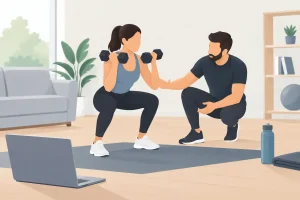
A sore knee, sensitive shoulder, or stiff back does not automatically mean strength training is off the table. It usually means exercise selection, range of motion, load, and technique deserve closer attention. A leg press may be more appropriate than a deep barbell squat for one person, while another may thrive with a controlled dumbbell squat.
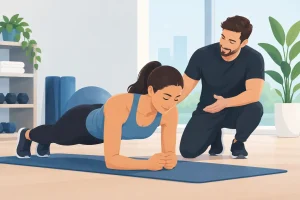
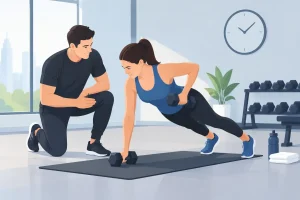
Quality coaching helps remove the guesswork. The right trainer watches how you move, adjusts the exercise to your body, and progresses it only when you are ready. That is far more productive than forcing yourself through a class designed for a room full of people with very different needs.
Make Protein and Recovery Part of the Plan
Training creates the stimulus. Recovery is where adaptation happens. Protein supports muscle repair and growth, which makes it a practical priority for women pursuing strength after menopause. Your ideal intake depends on body size, activity level, medical history, and overall diet, but spreading protein across meals is often more useful than saving most of it for dinner.
Sleep, hydration, and stress management also influence results. A demanding week at work, poor sleep, or an increase in hot flashes may affect how much you can do in a session. That does not mean you have failed or need to quit. It means a smart program adjusts without losing momentum.
The Most Effective Training Approach Is Personal
There is no single menopause workout that works for every woman. Someone with a history of athletics may be ready for heavier dumbbells and more complex lifts. Someone returning to exercise after years away may first need to develop movement confidence, basic stability, and consistency. Both can build real strength.
A personalized plan should account for four factors:
- Your current strength, movement quality, and exercise history
- Any joint pain, injuries, bone-density concerns, or medical restrictions
- Your available time and ability to recover between sessions
- Your goals, whether they involve energy, body composition, performance, or daily function
This is why short, focused sessions can be so effective. A well-coached 30-minute workout can deliver more value than an hour spent waiting for equipment, wondering what to do next, or repeating movements that do not suit your body. Efficiency comes from precision, not from rushing.
Bone Health Requires Smart Loading
For women after menopause, strength training and bone health often belong in the same conversation. Bones respond to appropriate mechanical loading, but more is not always better. The right approach depends on bone-density results, fracture history, balance, medication use, and guidance from your medical provider.
Weight-bearing activity such as walking can be beneficial, but it does not replace progressive resistance training. Exercises that strengthen the hips, legs, back, and upper body can support the muscular framework that helps you move confidently and resist falls. For some clients, gentle impact work may be appropriate. For others, particularly those with osteoporosis or specific spinal concerns, the program should avoid certain movements or ranges.
This is an area where individual assessment matters. A qualified coach should not hand every client the same template. They should understand when to challenge you, when to modify an exercise, and when a physician or physical therapist should be part of the conversation.
Common Mistakes That Slow Progress
One common mistake is relying only on cardio. Cardiovascular training is excellent for heart health, endurance, and mood, but it does not provide the same stimulus for preserving and building muscle. The strongest overall plan usually includes both cardio and resistance work, with the balance shaped around your goals.
Another mistake is changing the program every week. Variety can keep training engaging, but strength develops through enough repetition to practice a movement and gradually improve it. You do not need a brand-new workout every time you train. You need a thoughtful plan that evolves as you get stronger.
Finally, many women underestimate what they can safely achieve. Fear of getting bulky, fear of pain, or discomfort in a crowded gym can keep people stuck with weights that are too light to create change. Building substantial muscle takes time and consistent effort. Building useful strength is a realistic goal for nearly everyone when the plan is appropriate.
A Private Setting Can Make Consistency Easier
Consistency is often the deciding factor in strength gains. It is easier to stay consistent when you are not competing for equipment, feeling watched, or trying to figure out an unfamiliar gym floor on your own. A private training environment creates space to ask questions, learn correct technique, and focus fully on your session.
At UST Personal Training, one-on-one coaching in dedicated private rooms allows each session to be built around the client in front of the trainer. That includes adjusting exercises for comfort, tracking progress, and making productive use of a focused 30-minute appointment. There is no pressure to keep up with anyone else, only a clear plan to become stronger over time.
If you are returning to exercise after menopause, start where you are rather than where you think you should be. A few well-executed movements, repeated consistently and progressed with care, can change how strong and confident you feel in your body.