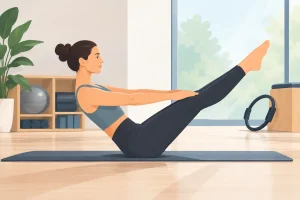

A busy professional workout routine example should not require a 5 a.m. wake-up call, a 90-minute gym visit, or the willpower to navigate a crowded weight room after a long day. It should fit your calendar, respect your current fitness level, and produce measurable progress. For most professionals, three focused 30-minute strength sessions each week are a far better starting point than an ambitious plan that falls apart by Thursday.
The goal is not to do more for the sake of doing more. The goal is to train with enough structure and intensity to build strength, improve cardiovascular health, and maintain the energy needed for work, family, and everything else competing for your attention.
What Makes a Workout Routine Work for Busy Professionals?
Time is not the only constraint. Decision fatigue, travel, unpredictable meetings, poor sleep, and the mental weight of a full schedule all affect consistency. A program that looks impressive on paper can still fail if it asks too much of an already demanding week.
A strong routine therefore needs a clear purpose for every session. Instead of separating exercise into long, single-muscle workout days, busy adults benefit from full-body sessions built around major movement patterns: squatting, hinging, pushing, pulling, carrying, and core stability. These movements train more muscle in less time and support the activities that matter outside the studio, from carrying luggage to sitting with better posture during a full day of meetings.
Progress also needs to be realistic. You do not need to leave every workout exhausted. You need to leave knowing you completed a professionally designed session that moved you forward. That distinction protects both your results and your ability to return for the next appointment.
A Busy Professional Workout Routine Example for a 3-Day Week
This example is designed for an adult with a demanding schedule who wants improved strength, body composition, and energy without spending hours exercising. Schedule the workouts on nonconsecutive days when possible, such as Monday, Wednesday, and Friday. If your calendar shifts, Tuesday, Thursday, and Saturday works just as well.
Each session lasts about 30 minutes. Begin with a brief dynamic warm-up that prepares your joints, raises body temperature, and rehearses the movements ahead. The working sets should feel challenging, but technique stays in control. Rest periods are intentional, not wasted time. They help you use appropriate resistance and maintain quality throughout the session.
Day 1: Strength Foundation
Start with a lower-body strength movement, such as a goblet squat or leg press, for three sets of 8 to 10 repetitions. Pair it with a chest press or elevated push-up for three sets of 8 to 12 repetitions. Next, complete a seated row or cable row for three sets of 10 to 12 repetitions.
Finish with a hip hinge movement, such as Romanian deadlifts, for two sets of 8 to 10 repetitions, followed by a plank variation for two controlled sets. This session establishes the foundation: legs, chest, back, hips, and trunk all receive focused work without unnecessary filler.
Day 2: Conditioning and Athletic Strength
The second session keeps the pace slightly higher while still prioritizing strength. Begin with split squats or step-ups for three sets of 8 repetitions per side. Follow with a dumbbell shoulder press for three sets of 8 to 10 repetitions and a lat pulldown for three sets of 10 repetitions.
For the final 6 to 8 minutes, use a low-impact conditioning interval such as a stationary bike, incline treadmill walk, or sled push. Work hard for 30 to 45 seconds, then recover at an easy pace for 60 to 90 seconds. The right option depends on your joints, fitness history, and preferences. High-intensity training is useful, but it is not automatically better, particularly when stress and recovery are already limited.
Day 3: Total-Body Strength and Carry Work
On the third day, perform a deadlift variation, trap-bar deadlift, or supported hinge for three sets of 6 to 8 repetitions. Pair it with a dumbbell bench press for three sets of 8 to 10 repetitions, then add a chest-supported row for three sets of 10 repetitions.
Complete the session with farmer carries and a core exercise such as a dead bug or Pallof press. Carries are exceptionally efficient for busy professionals because they train grip, posture, core stability, and total-body control at the same time. They also provide a useful contrast to a workday spent seated at a desk, in a car, or on a phone.
What to Do on the Other Days
You do not need another hard workout on every day off. In fact, trying to make every day a training day is one of the fastest ways to turn fitness into another obligation you resent.
Aim for 20 to 30 minutes of walking on most non-training days, whether that means a lunchtime walk, a few short walks between calls, or an evening walk with family. If you enjoy it, add one easy cardiovascular session each week, keeping the effort comfortable enough that you could still hold a conversation.
This lower-intensity activity supports heart health, recovery, and daily movement without interfering with strength progress. It also gives you flexibility. During a demanding week, a walk may be the right choice. During a lighter week, you may have room for a longer bike ride, tennis match, or additional cardio session.
How to Make 30 Minutes Count
Efficient training is not rushed training. The difference comes from preparation, exercise selection, and coaching. If you spend 10 minutes deciding what to do, waiting for equipment, or searching for an open bench, a 30-minute workout quickly becomes unproductive.
In a private, appointment-only setting, your training time can be devoted to the work itself. At UST Personal Training, clients train in dedicated private rooms with a coach who has already planned the session, prepared the equipment, and adjusted the workout to the client in front of them. That level of attention is especially valuable for professionals who cannot afford to waste their limited training window.
Supersets can also improve efficiency when used appropriately. Pairing a lower-body exercise with an upper-body exercise, for example, allows one muscle group to recover while another works. However, not every exercise should be rushed into a superset. Heavy strength movements, new exercises, and movements requiring careful technique may need more recovery and direct coaching.
Adjust the Plan to Your Starting Point
A routine is only effective when it matches the person performing it. A beginner may start with two sessions per week, lighter resistance, and more guided movement practice. Someone returning after an injury may need modifications that protect a sensitive joint while rebuilding strength elsewhere. An experienced exerciser may require greater resistance, more advanced progressions, or a specific performance focus.
The same principle applies to weight loss goals. Training supports fat loss, but nutrition, sleep, stress, and daily movement influence results just as strongly. A demanding executive who sleeps five hours per night may benefit more from a sustainable three-day program and practical nutrition coaching than from an aggressive six-day plan that adds more stress.
Track a few meaningful measures: the weights you use, repetitions completed with good form, energy levels, waist measurements if appropriate, and how your clothes fit. Scale weight can be useful, but it should not be the only scorecard. Stronger movement, better posture, improved endurance, and greater confidence in your body are real progress.
Protect Your Workout Appointment Like a Business Meeting
The most effective routine is the one you can repeat. Put your sessions on the calendar first, choose a consistent time when possible, and prepare your workout clothes the night before. If an unavoidable meeting disrupts the day, reschedule rather than treating the missed session as a reason to abandon the week.
There will be travel weeks, deadlines, and periods when recovery is not ideal. Those are not failures. They are reasons to simplify the plan, keep moving, and return to your normal rhythm as soon as possible. Consistency is built through the ordinary weeks, not through occasional bursts of extreme effort.
Your schedule may be full, but your health does not have to become an afterthought. Reserve a focused 30 minutes, train with a plan that fits your life, and give yourself the same level of commitment you bring to the responsibilities that matter most.