
Getting up from a low chair, carrying groceries, climbing stairs, and catching yourself after a misstep all require strength. Senior strength exercises are not about chasing a number on a barbell or keeping up with anyone else. They are about maintaining the physical capacity to move through daily life with greater confidence, control, and independence.
For many adults, the challenge is not a lack of motivation. It is uncertainty. Which movements are appropriate? How hard should a workout feel? What if an old knee, shoulder, or back issue starts talking? A well-designed strength program answers those questions with a clear plan that progresses at the right pace.
Why Strength Training Matters More With Age
Muscle mass and strength can decline over time, especially when activity levels drop after an injury, illness, retirement, or a busy stretch of life. That loss can make ordinary tasks feel more demanding than they should. It can also affect balance, walking speed, posture, and the confidence to stay active.
Strength training gives the body a reason to maintain and build useful muscle. The goal is functional strength: stronger legs for standing and stair climbing, a stronger upper body for lifting and reaching, and a stronger core for stability while walking, turning, and carrying everyday items.
The benefits often extend beyond the workout itself. Many people notice that regular training helps them feel steadier on their feet, more capable during travel or social activities, and less hesitant about movements they once avoided. Results depend on consistency, health history, sleep, nutrition, and the quality of the program, but the right training can be a powerful investment in long-term independence.
The Best Senior Strength Exercises Start With Movement Quality
The best exercise is not automatically the most advanced one. It is the movement that challenges the right muscles while allowing good control, appropriate range of motion, and consistent technique. A trainer may start with bodyweight exercises, resistance bands, cables, machines, light dumbbells, or supported variations. The equipment matters less than the fit.
For someone returning to exercise after years away, standing from a bench may be a productive lower-body exercise. For another person with a solid training background, a weighted squat variation may be appropriate. Both can build strength. The difference is matching the exercise to the person rather than forcing the person into a standard workout.
Pain is a key distinction. Muscles working hard can feel challenging, warm, or fatigued. Sharp pain, joint pain, dizziness, chest discomfort, or symptoms that feel unusual are signals to stop and assess. Individuals with a recent surgery, uncontrolled medical condition, significant osteoporosis, neurological condition, or unresolved injury should seek appropriate medical guidance before beginning or changing an exercise program.
Sit-to-Stand for Stronger Legs
A sit-to-stand builds strength in the quadriceps, glutes, and core while directly improving a daily movement pattern. Begin seated on a stable bench or chair, place the feet firmly beneath the body, and stand without using the hands when possible. Then lower slowly with control.
The height of the seat is adjustable. A higher surface reduces the range of motion and can make the exercise more accessible. As strength improves, the seat can be lowered, the pace can be slowed, or light resistance can be added. The priority is not speed. It is smooth, controlled repetitions with knees and feet tracking comfortably.
Supported Step-Ups for Stairs and Balance
Step-ups strengthen the legs one side at a time and can help prepare the body for curbs and stairs. Use a low, stable platform and a secure support nearby. Step up with one foot, press through the full foot, stand tall at the top, and return slowly.
This exercise reveals side-to-side differences that may be hidden during bilateral movements. If one leg is notably weaker or less stable, that does not mean the exercise should be avoided. It means the height, support, and volume should be adjusted so the person can practice safely and improve gradually.
Hip Hinge Patterns for Back-Friendly Lifting
Learning to hinge at the hips is valuable for picking up objects, loading a dishwasher, gardening, and moving through everyday life without relying entirely on the lower back. A trainer may teach the pattern with a dowel, a light weight, or a cable setup.
The cue is simple: allow the hips to move back while keeping the spine controlled and the object close to the body. The hamstrings and glutes should do much of the work. Not everyone needs to perform a traditional deadlift from the floor. Elevated variations are often a smart place to begin, particularly for people with limited mobility or concerns about balance.
Rows and Presses for Posture and Everyday Carrying
Upper-body strength supports practical tasks such as lifting a bag, carrying a grandchild, reaching into a cabinet, or opening a heavy door. Rowing movements strengthen the upper back and can support better posture, while pressing movements build the chest, shoulders, and triceps.
Cable machines and resistance bands are especially useful because they allow resistance to be adjusted precisely and can provide a more controlled path than free weights. For individuals with shoulder limitations, the angle of a press or row may need to change. There is no benefit to forcing a range of motion that does not feel right.
Carries for Real-World Strength
A carry is exactly what it sounds like: holding an appropriate weight and walking with tall posture, steady breathing, and controlled steps. It trains grip strength, core stability, posture, and gait in one highly practical movement.
Carries can be performed with one weight or two, for a short distance or a set amount of time. They are simple, but they are not casual. Proper loading matters because too much weight can compromise posture or balance. Starting conservatively allows the body to learn the movement without unnecessary risk.
How Often Should Seniors Strength Train?
For many people, two or three nonconsecutive strength sessions per week is a practical and effective starting point. A full-body approach is often more useful than dedicating separate days to isolated body parts, especially when time and recovery are priorities.
A productive session does not need to last an hour. Focused 30-minute sessions can cover the major movement patterns when the workout is organized and individualized. The right amount of training depends on current fitness, goals, recovery capacity, medical considerations, and other activities such as walking, golf, swimming, or cycling.
Progress should be measured in more than pounds lifted. Better form, an easier time getting out of a chair, a longer walk without fatigue, improved balance, or greater confidence on stairs are all meaningful signs that the program is working. Some weeks call for progression. Other weeks call for maintaining the same load while improving control. That is not falling behind. It is intelligent training.
Why Private Coaching Can Make a Meaningful Difference
Crowded gyms can be distracting, intimidating, and poorly suited to someone who needs careful attention to technique. A generic group workout may also move too quickly for an individual managing joint limitations, balance concerns, or a return to exercise after time away.
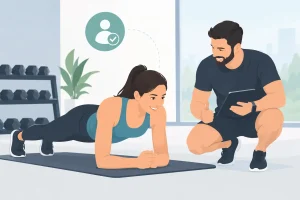
Private coaching changes the experience. Every exercise, resistance level, rest period, and progression can be selected around the client in front of the trainer. There is room to ask questions, practice movements without feeling rushed, and make adjustments in real time. That level of attention is particularly valuable when safety and confidence are as important as performance.
At UST Personal Training in South Tampa, clients train one-on-one in dedicated private rooms with experienced coaches and modern equipment. The setting removes the pressure of a commercial gym and allows each session to stay focused on the movements that matter most to that individual.
Build Strength for the Life You Want to Keep Living
The most effective program is one you can continue. Start with movements that feel manageable, train consistently, and let progress build through sound technique rather than guesswork. Stronger legs, steadier balance, and more capable daily movement rarely come from one hard workout. They come from a plan that respects where you are now while steadily preparing you for more.