The free weights vs machines question usually comes up when someone is ready to train with more purpose. They do not want to wander through a crowded gym trying random equipment. They want to know what will help them get stronger, feel better, protect their body, and make the most of the time they have.
The honest answer is that neither option wins in every situation. Free weights and machines each have a valuable place in a well-designed program. The better choice depends on your movement quality, training experience, injury history, goals, and how much coaching you have available.
For most people, the fastest path to results is not choosing one side. It is using the right tool at the right time, with a trainer who knows how to tailor every exercise to your body.
Free Weights vs Machines: The Real Difference
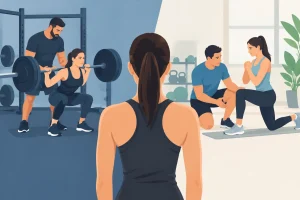
Free weights include dumbbells, barbells, kettlebells, and weighted implements that are not fixed to a track. Your body controls the path of the movement. A machine guides resistance along a predetermined route, such as a leg press, chest press, seated row, or leg curl.
That difference affects how your muscles work. With free weights, you must control balance, posture, and coordination while producing force. With machines, the equipment provides more stability, allowing you to focus more directly on moving the resistance through a set range of motion.
Neither approach is automatically more advanced or more effective. A controlled dumbbell press can be an outstanding strength exercise. So can a properly programmed chest press machine. The value comes from appropriate exercise selection, excellent technique, progressive loading, and consistency over time.
When Free Weights Are the Right Tool
Free weights are exceptionally useful for building strength that carries into everyday movement. Picking up luggage, carrying groceries, getting up from the floor, climbing stairs, and maintaining balance all require your body to coordinate multiple muscles at once. Exercises such as squats, deadlifts, lunges, rows, presses, and loaded carries can train those patterns effectively.
They also allow for more individual adjustment. A dumbbell can move in a slightly different path for each arm, which can feel more natural for people with differences in shoulder mobility, limb length, or previous injuries. A skilled trainer can change your grip, stance, range of motion, tempo, or load to keep the exercise productive and comfortable.
Free weights can be particularly valuable when your goal is to improve total-body strength, athletic performance, balance, or confidence with movement. They challenge stabilizing muscles that may receive less demand on a fixed machine. For a client who wants to feel capable outside the studio, that can be a meaningful benefit.
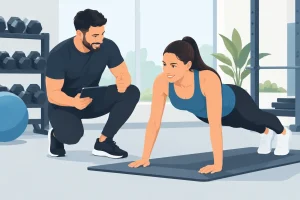
There is a trade-off. Free-weight exercises require more attention to setup and form. A barbell squat or dumbbell lunge performed with poor control is not automatically dangerous, but it may be less comfortable and less effective than it should be. This is where private coaching makes a measurable difference. The trainer can watch the details, make adjustments immediately, and select a variation that matches your current ability.
When Machines Make More Sense
Machines are often underestimated because they look simple. In reality, they can be one of the most efficient ways to develop strength, build muscle, and train safely, especially when time is limited.
A machine reduces the balance and coordination demands of an exercise. That can help a beginner learn how it feels to work the intended muscle group without worrying about keeping a dumbbell steady or controlling a complex movement pattern. It can also be helpful for someone returning to exercise after an injury, surgery, extended time away from training, or a period of low confidence.
Machines make it easier to train close to muscular fatigue with less concern about losing control of the weight. For example, a leg press may let a client challenge the lower body hard while providing more support than a free-weight squat. A chest-supported row can build the upper back without requiring the same degree of trunk control as a bent-over row.
That does not mean machines are only for beginners. Experienced exercisers benefit from them as well. Machines can add targeted training volume without placing unnecessary stress on areas that are already fatigued. After a demanding set of free-weight squats, a leg extension or hamstring curl may be an efficient way to strengthen the legs further without compromising technique.
The key is fit. A machine should be adjusted to your body, not the other way around. Seat position, back support, handles, foot placement, and range of motion all matter. What feels excellent for one person may feel awkward for another, which is why a knowledgeable coach does more than point to a machine and say, “Go.”
Safety Is Not About the Equipment Alone
People often ask whether machines are safer than free weights. Machines can offer more support and a lower skill requirement for many movements, but safety is not determined by equipment alone. Poor setup, excessive load, rushed repetitions, and ignoring pain can turn any exercise into a poor choice.
Free weights can be very safe when the exercise is appropriate and the person has been coached well. Machines can be very safe when they are adjusted correctly and used through a comfortable range of motion. The safest training plan is the one that respects your current starting point while giving you enough challenge to improve.
At a premier private training studio, safety should feel active rather than restrictive. You should not be handed a generic routine and left to figure it out. Your coach should assess how you move, identify where you need support, and progress exercises when you have earned the next step.
Which Is Better for Weight Loss and Body Composition?
For fat loss, the free weights vs machines debate matters less than many people think. Successful body-composition change comes from consistent training, appropriate nutrition, cardiovascular fitness, daily activity, recovery, and a program you can maintain. Both free weights and machines can build or preserve lean muscle while you pursue a calorie deficit.
Strength training is especially valuable during weight loss because it gives your body a reason to hold onto muscle. Whether you use dumbbells, a cable station, or a leg press, the goal is to create enough stimulus to maintain or improve strength over time.
For busy professionals, the most effective method is often the one that can be performed well in a focused 30-minute session. A thoughtful program may pair a free-weight movement with machines that target specific muscles efficiently. This keeps the workout demanding without wasting time waiting for equipment, changing stations repeatedly, or trying to decode an overly complicated plan.
A Smart Program Uses Both
The strongest programs are rarely built around an all-or-nothing philosophy. They use free weights for movements where coordination, stability, and real-world strength matter. They use machines where added support, isolation, efficient loading, or fatigue management makes sense.
A client rebuilding after a shoulder issue may begin with a machine chest press, cable rows, and controlled lower-body work. As strength and comfort improve, the program may introduce dumbbell pressing or carries. Someone with years of lifting experience may use heavy barbell movements as the foundation, then use machines to train specific areas with precision.
Your plan may also change from week to week. Stress, sleep, travel, discomfort, and training goals all influence what your body needs on a given day. That flexibility is one reason personalized coaching delivers more value than a one-size-fits-all workout.
How to Choose for Your Goals
If you are new to strength training or feel intimidated by a commercial gym, machines can provide an approachable starting point. You can build confidence, learn effort levels, and develop foundational strength in a controlled setting. Free weights can then be introduced gradually, using variations that fit your mobility and comfort.
If your priority is functional strength, balance, or improving performance in activities such as golf, tennis, running, or recreational sports, free weights will likely play a significant role. They train your ability to control your body and produce force in ways that can translate well beyond the gym.
If you are returning from an injury, the answer depends on the injury, your medical guidance, and your current movement capacity. Machines may provide useful stability, but certain free-weight variations may also be appropriate. Avoid choosing based on fear or gym folklore. Choose based on a professional assessment and a clear progression plan.
At UST Personal Training, every session is built around the person in front of the trainer, not a preference for one piece of equipment over another. In a private room, there is space to focus on your technique, your goals, and the next best step without an audience, distractions, or pressure to keep up with anyone else.
The best exercise is not the one that looks most impressive across the gym floor. It is the one you can perform with confidence, progress with control, and repeat consistently enough to change how you feel and function. Start there, and let your program earn the right to become more challenging.