
A desk chair can make poor posture feel almost invisible. Hours pass with the head drifting forward, shoulders rounding, and hips becoming fixed in one position. Then a simple task – standing up, reaching overhead, carrying groceries, or checking blind spots while driving – exposes how restricted the body feels. So, can Pilates improve posture? For many people, it can be a valuable part of the answer, especially when it is practiced with precise instruction and paired with strength training that fits the individual.
Pilates is not a magic correction for every rounded shoulder or aching low back. Posture is influenced by daily habits, work setup, stress, prior injuries, mobility, strength, and even how much time a person spends in one position. What Pilates does well is teach awareness and control while building the strength and mobility needed to move with better alignment.
Can Pilates Improve Posture Over Time?
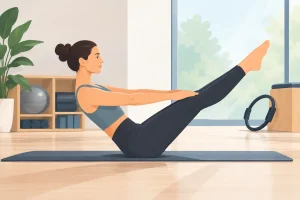
Yes, Pilates can improve posture by training the muscles that help stabilize the trunk, pelvis, shoulders, and spine. Traditional Pilates exercises emphasize controlled movement, breathing, trunk stability, and balanced muscular engagement. Rather than simply telling someone to “sit up straight,” the work helps them develop the physical capacity to maintain a more efficient position.
That distinction matters. Good posture is not a rigid, chest-out pose held all day. The healthiest posture is usually one that changes often and allows the body to distribute load comfortably. A person with excellent alignment can still develop stiffness or discomfort after sitting motionless for hours. Pilates can help build control, but regular movement throughout the day remains essential.
Results also depend on the starting point. Someone whose posture has changed after months of remote work may notice improvements in body awareness and comfort relatively quickly. Someone rebuilding after an injury, dealing with persistent pain, or managing a structural spinal condition needs a more individualized plan and, when appropriate, coordination with a qualified medical provider.
Why Posture Changes in the First Place
Posture is often blamed on “weak muscles,” but the picture is more complex. A busy professional may have plenty of strength yet spend long days looking down at a laptop. An active person may have mobile hips but limited upper-back movement. Someone returning to exercise may avoid certain motions because they no longer trust their body after an injury.
Common patterns include a forward head position, rounded upper back, shoulders that sit forward, an exaggerated low-back arch, or a pelvis that shifts unevenly. These positions are not automatically dangerous. The concern is whether a pattern is accompanied by discomfort, restricted motion, reduced strength, poor balance, or difficulty handling daily activities.
The goal should not be to force every body into one perfect shape. It should be to improve the ability to control position, move through a useful range of motion, and tolerate the demands of work, exercise, and life with greater confidence.
How Pilates Supports Better Alignment
Pilates is especially useful because it combines several elements that are often separated in generic workouts. A well-coached session asks the body to stabilize while moving, rather than relying on momentum or compensation.
Core control without constant bracing
The core is more than the visible abdominal muscles. It includes the deeper muscles around the trunk, diaphragm, pelvic floor, back, and hips that work together to manage pressure and create stability. Pilates teaches people to use these muscles with intention instead of clenching their stomach all day.
That can be particularly helpful for people who feel their low back take over during exercise. Better trunk control may allow the hips and upper back to contribute more effectively, reducing the tendency to hang on the lower back during standing, lifting, or overhead movements.
Stronger support around the shoulders
Rounded shoulders are rarely solved by aggressively pulling the shoulders backward. Many people need better strength and coordination in the muscles that control the shoulder blades, along with improved movement through the upper back.
Pilates movements can reinforce scapular control, shoulder stability, and upper-body awareness. When these elements improve, standing taller may feel less like a correction and more like a natural result of better support.
More usable mobility
Flexibility alone does not create good posture. A person may be able to stretch deeply but lack the strength to control that range. Pilates tends to pair mobility work with control, which is one reason it can transfer well to daily movement.
For example, improving hip mobility can make it easier to squat, climb stairs, and bend without compensating through the low back. Improving upper-back rotation can make reaching and turning feel smoother. The value is not simply moving farther. It is owning the movement with strength and control.
Greater body awareness
Many posture habits are automatic. A person may not realize they lock their knees while standing, shift onto one hip, elevate their shoulders when stressed, or crane their neck toward a screen. Pilates uses deliberate pacing and focused cues to make those patterns easier to recognize.
Awareness is a practical skill, not a cosmetic one. Once someone can feel when they are compensating, they have a better chance of choosing a different position, taking a movement break, or adjusting their workspace before discomfort builds.
Where Pilates Has Limits
Pilates can be highly effective, but it is not the only training method needed for everyone. If the goal includes stronger bones, improved athletic performance, easier lifting, or long-term protection against muscle loss, progressive resistance training should be part of the plan. Heavier strength work builds capacity that mat-based Pilates alone may not fully provide.
Cardiovascular exercise matters, too. Walking, cycling, swimming, or other conditioning work helps offset long periods of sitting and supports overall health. The most effective posture strategy is not a single class or exercise. It is a program that develops strength, mobility, endurance, and regular movement habits.
Pain also deserves a careful approach. Sharp pain, numbness, tingling, unexplained weakness, or symptoms that worsen should not be pushed through in the name of better posture. These signs warrant evaluation from an appropriate healthcare professional. Exercise can be an excellent tool, but the right approach begins with understanding the individual situation.
Pilates and Personal Training: A Stronger Combination
For many adults, the best results come from applying Pilates principles within a personalized strength program. Controlled core work, mobility drills, and alignment coaching can prepare the body for squats, hinges, rows, presses, carries, and other foundational movements. Those strength exercises then give the body more capacity to maintain good mechanics in real life.
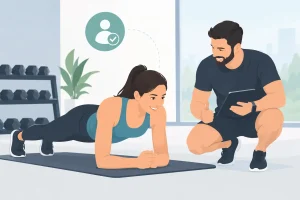
This is where private coaching has a meaningful advantage. In a crowded class setting, an instructor may not be able to identify whether a client is compensating through the neck, lower back, or hips. In a private setting, programming can be adjusted around mobility limitations, previous injuries, work demands, and confidence level.
At UST Personal Training, a focused 30-minute private session can incorporate posture-focused movement, strength training, and practical coaching without the distractions of a commercial gym. The goal is not to chase a temporary “perfect posture” pose. It is to help clients build a stronger, more capable body that moves well during the other 23 and a half hours of the day.
What Progress Usually Looks Like
Posture improvements are often felt before they are seen. Clients may first notice that they can sit through a meeting with less stiffness, stand more comfortably while cooking, or finish a workout without neck tension. They may become more aware of when they need to move instead of waiting for discomfort.
Visible changes can happen, particularly when improved strength and mobility reduce a habitual forward or collapsed position. Still, appearance should not be the only measure of success. Better balance, easier breathing during exercise, more confident lifting, and fewer movement restrictions are equally valuable outcomes.
Consistency drives progress. Two well-coached sessions per week, paired with simple daily movement breaks and a thoughtfully designed home routine, can create meaningful change over time. The right plan should feel challenging enough to build capacity, but controlled enough that form and confidence continue to improve.
If posture has become a daily source of stiffness, frustration, or self-consciousness, start by treating it as a movement opportunity rather than a flaw to fix. Build strength, restore motion where it is needed, and give your body enough expert attention to learn a better way to move.